ADHD LEARNING PATHWAYS...

A Skill-Building Approach for Kids, Teens, and Adults with ADHD Symptoms. Supported by a Parent or Spouse/Partner.

ADHD Success Navigator Programs

Kids (5–6), Youth (7–18), Adults
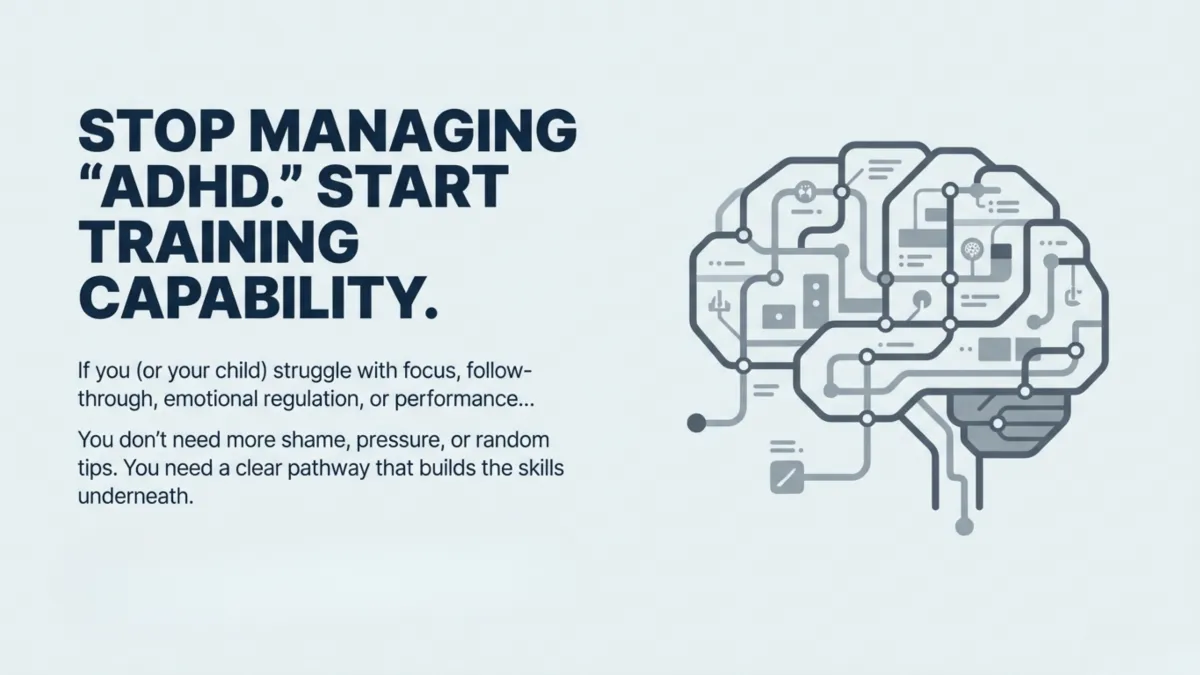
Stop managing “ADHD.” Start training capability — message for adults or kids struggling with focus, follow-through, emotional regulation, or performance — clear pathway that builds the underlying skills; brain circuit illustration
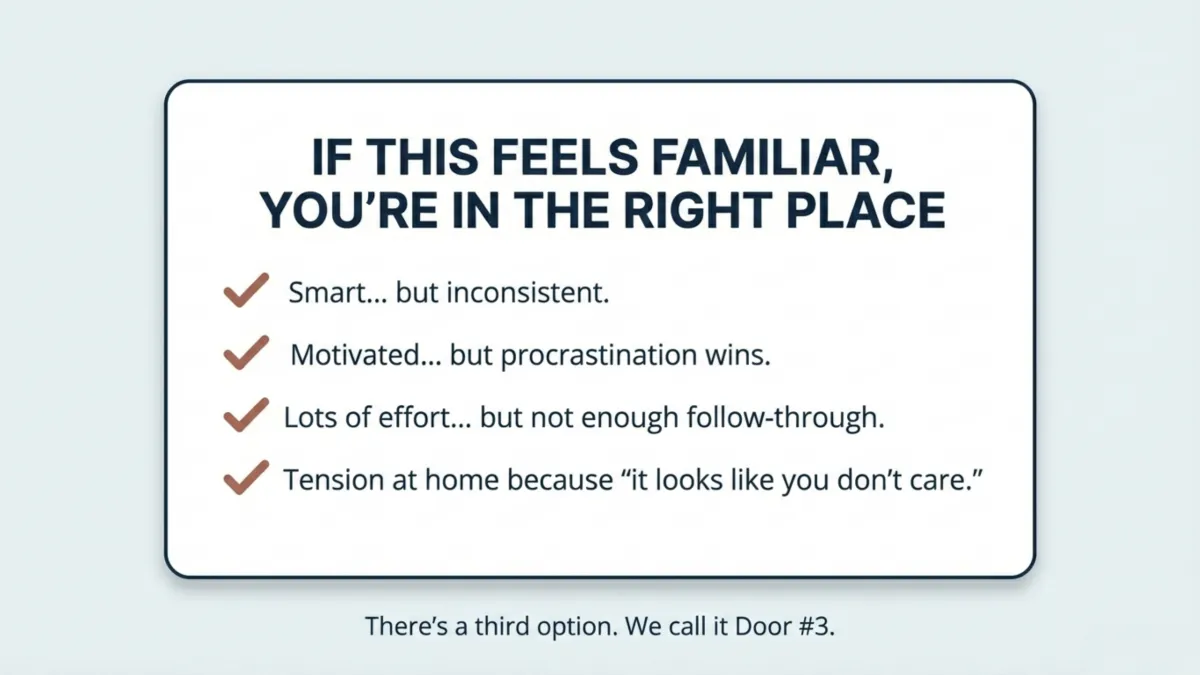
If this feels familiar, you’re in the right place — “Smart… but inconsistent; Motivated… but procrastination wins; Lots of effort… but not enough follow-through; Tension at home because ‘it looks like you don’t care.’” — “There’s a third option. We call it Door #3.”
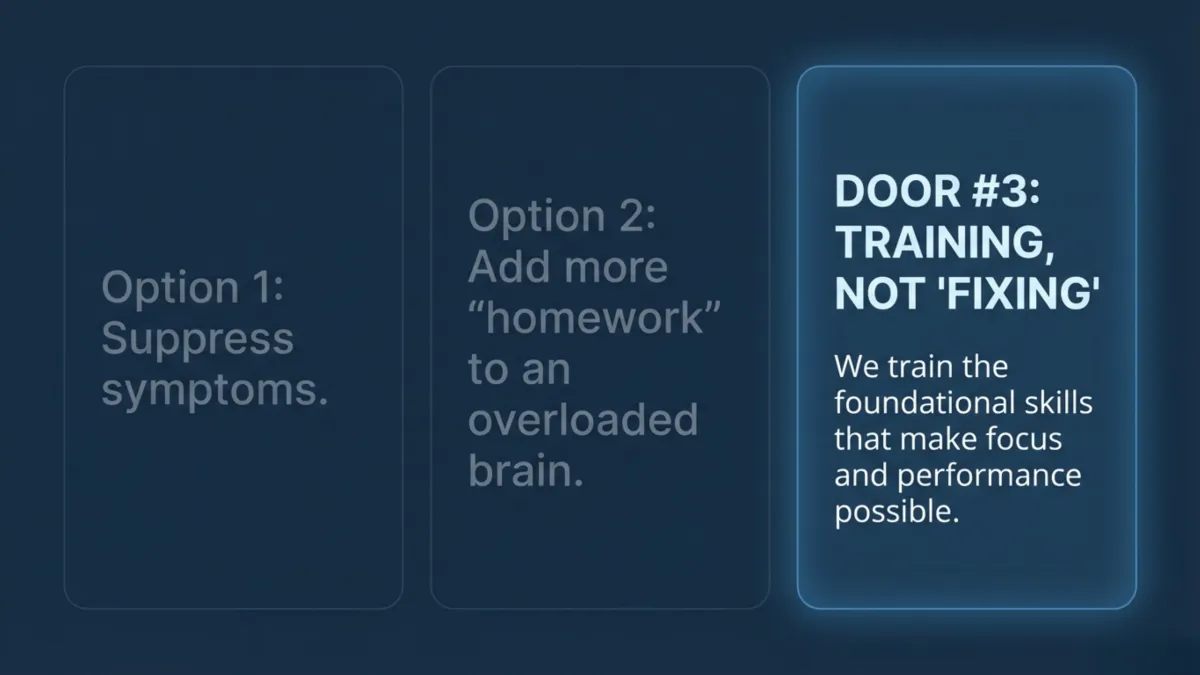
Door #3: Training, not “fixing” — we train foundational skills that make focus and performance possible — shows Option 1 suppress symptoms, Option 2 add more homework to an overloaded brain, Option 3 training
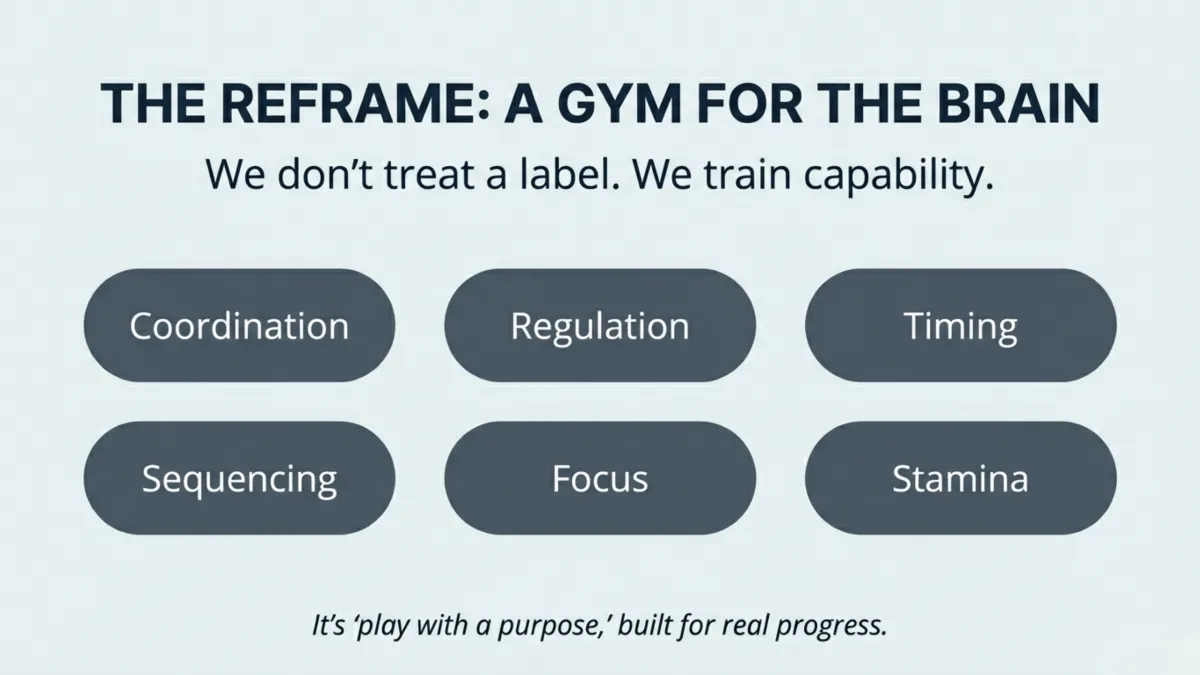
The reframe: a gym for the brain — “We don’t treat a label. We train capability.” — skills trained: coordination, regulation, timing, sequencing, focus, stamina — “play with a purpose” built for real progress
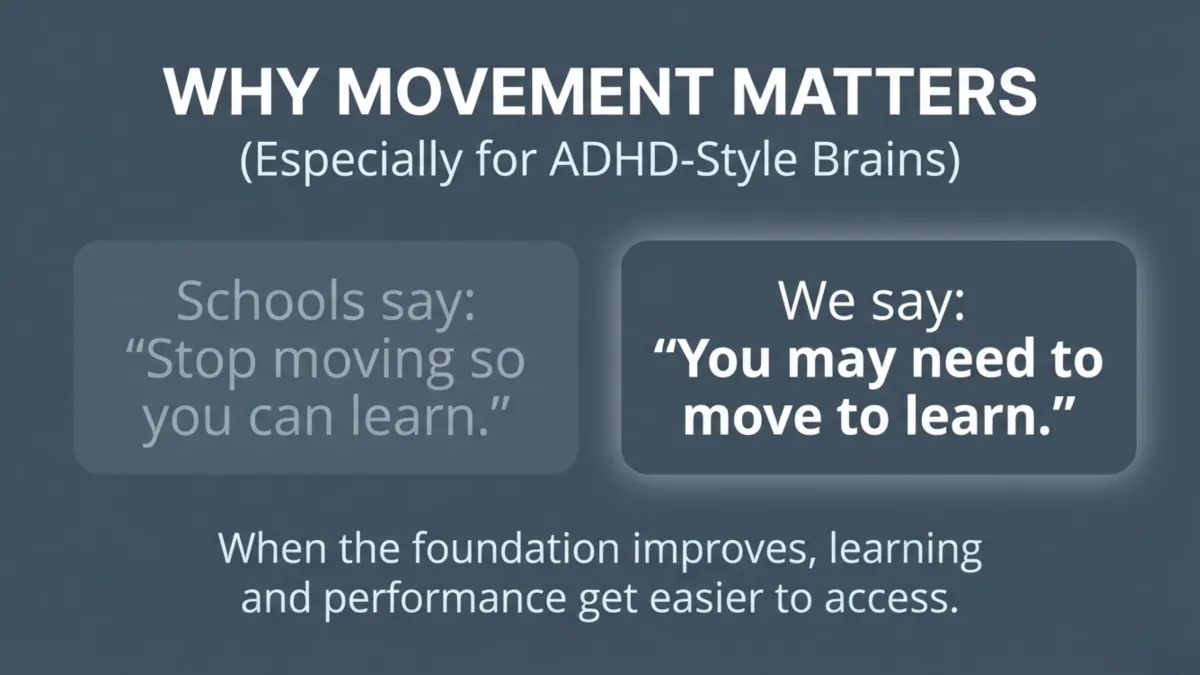
Why movement matters (especially for ADHD-style brains) — schools say “Stop moving so you can learn” — we say “You may need to move to learn” — when the foundation improves, learning and performance get easier to access
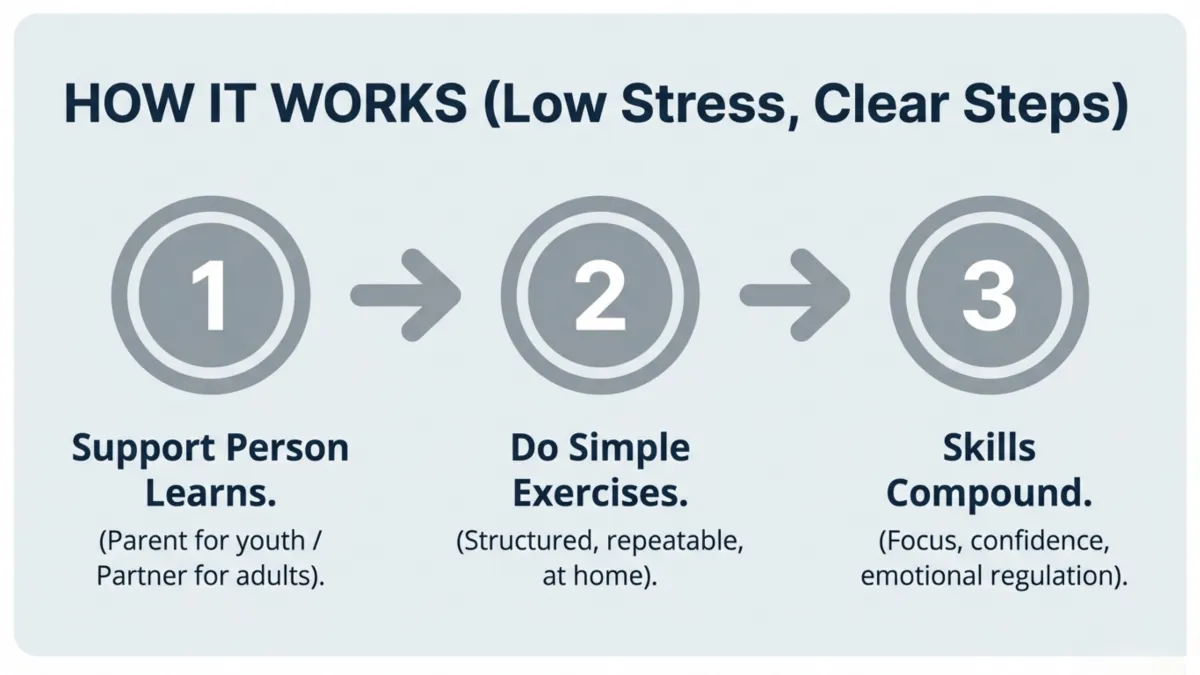
How it works (low stress, clear steps) — 1) Support person learns (parent for youth/partner for adults) 2) Do simple structured repeatable exercises at home 3) Skills compound (focus, confidence, emotional regulation)

"ADHD Learning Pathways has been a game-changer for me. I used to struggle with staying organized and managing my time at work. Now, I'm excelling in my career and personal life. Thank you, ADHD Learning Pathways!"- Ron

"He is now earning all A’s and B’s in school, is completing all classwork in class, is completing most homework assignments in class, and best of all, he is retaining the information and able to recall. On top of that, his social skills have greatly improved as well as his physical abilities." - Sue.
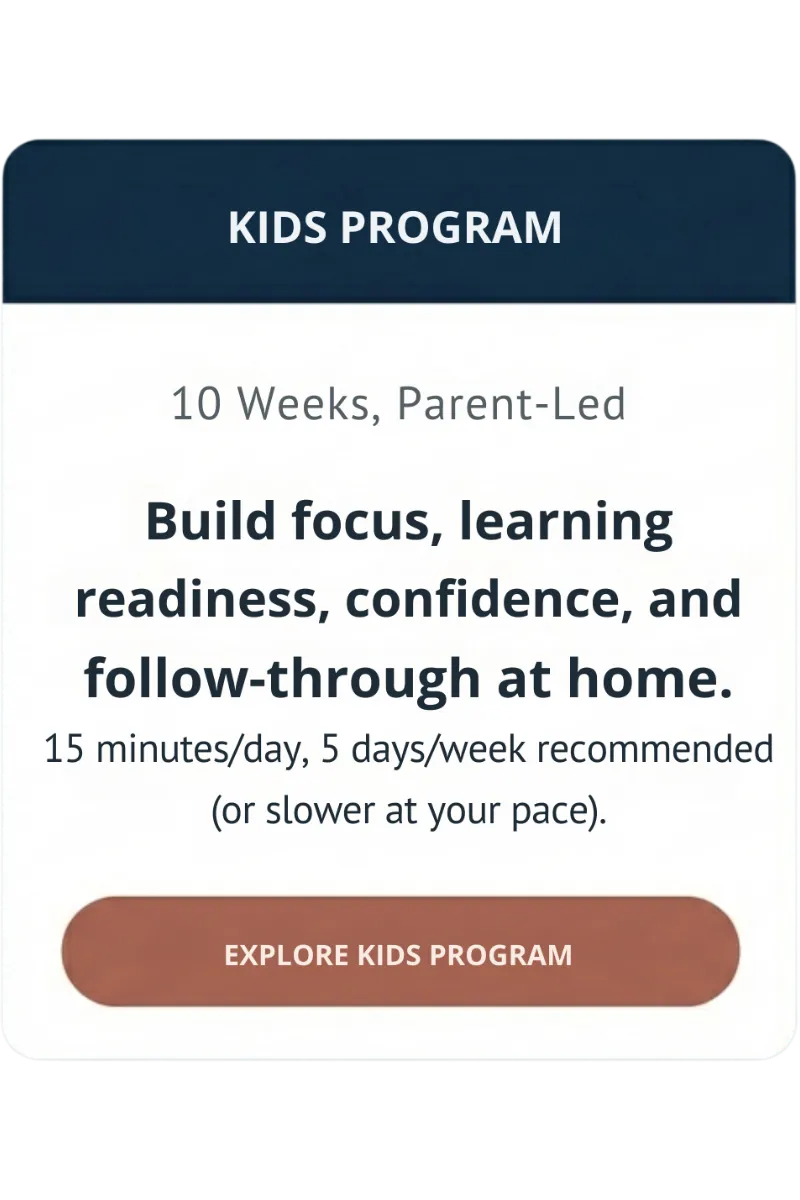
Kids Program — 10 Weeks, parent-led — build focus, learning readiness, confidence, and follow-through at home — 15 mintues/day, 5 days/week recommended (or slower at your pace) — “Explore Kids Program”
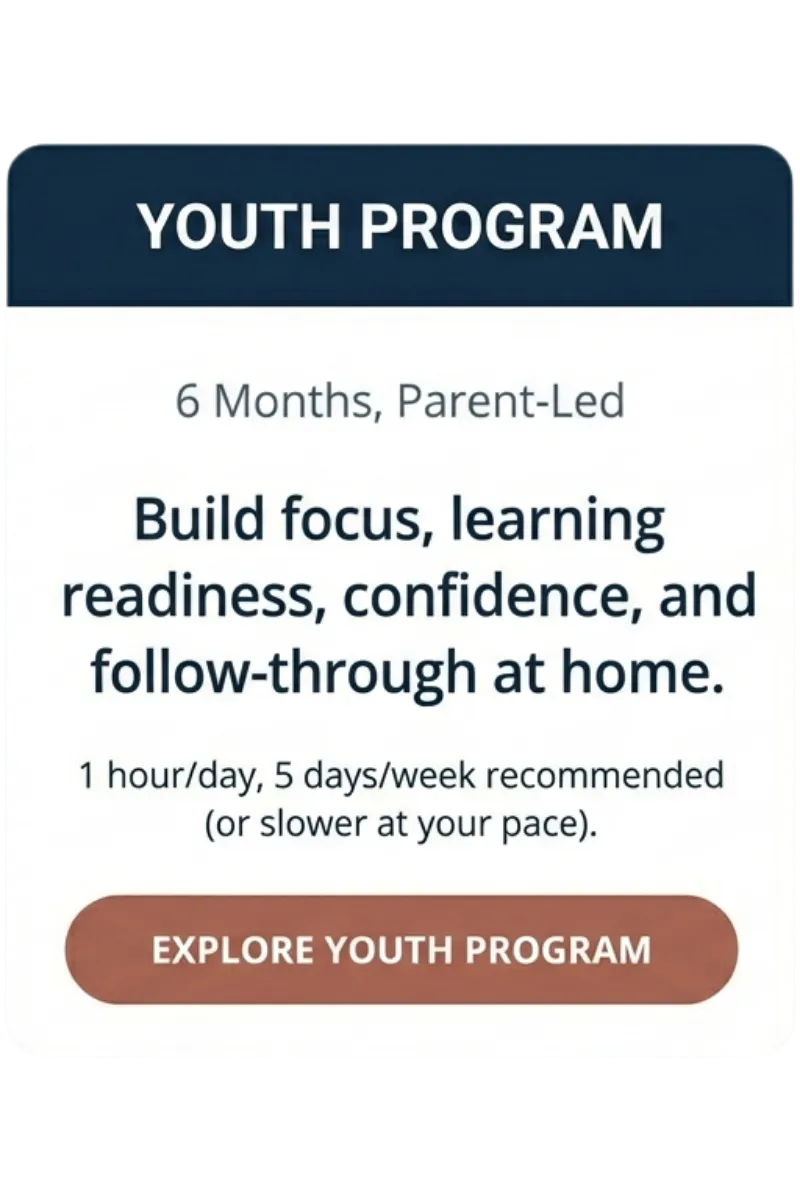
Youth Program — 6 months, parent-led — build focus, learning readiness, confidence, and follow-through at home — 1 hour/day, 5 days/week recommended (or slower at your pace) — “Explore Youth Program”
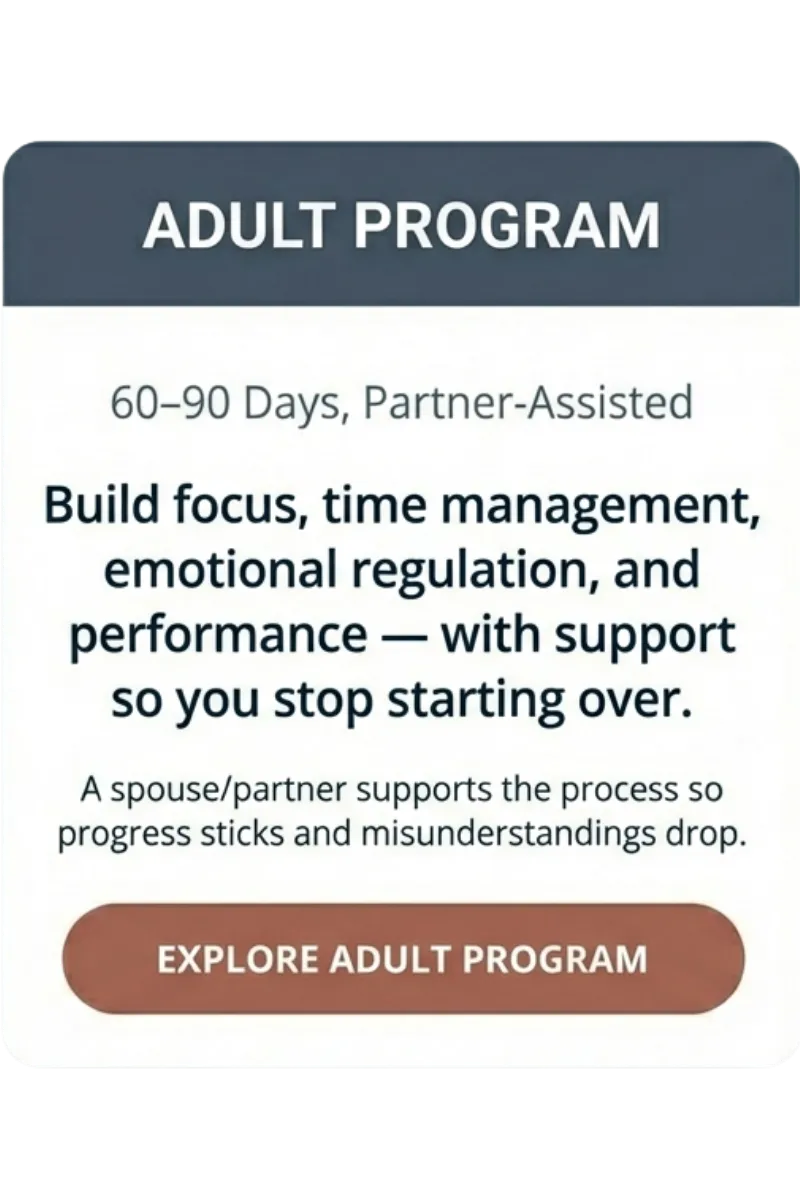
Adult Program — 60–90 days, partner-assisted — build focus, time management, emotional regulation, and performance with support so you stop starting over — spouse/partner helps progress stick and misunderstandings drop — “Explore Adult Program”
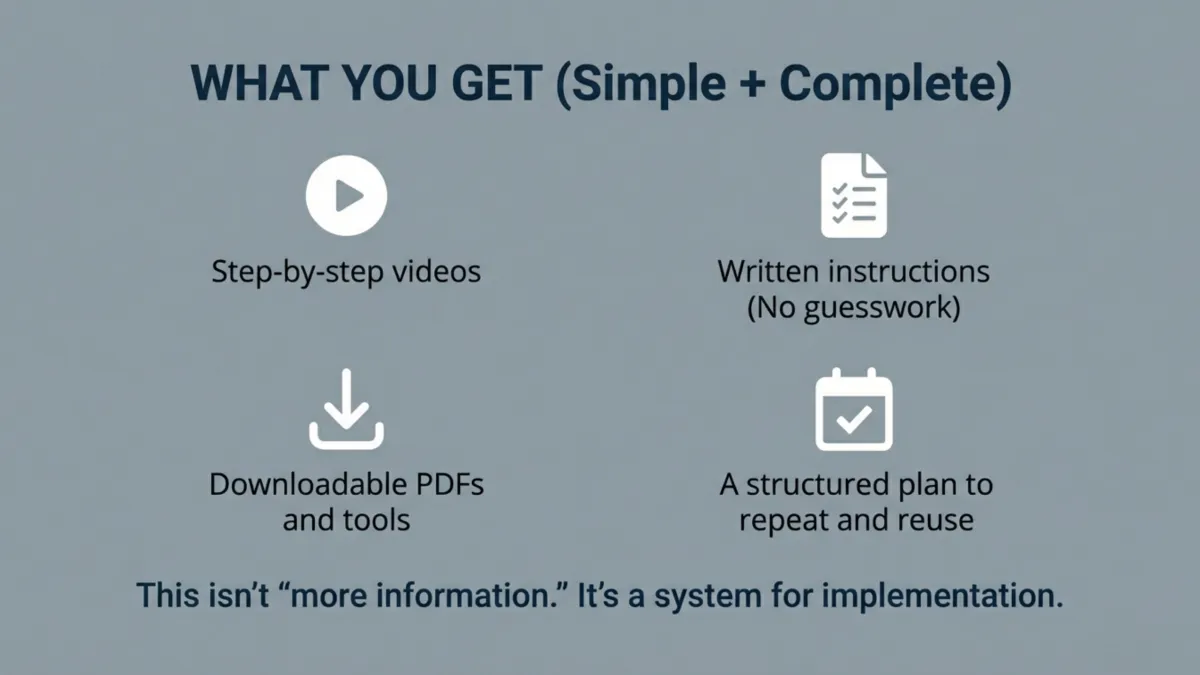
What you get (simple + complete) — step-by-step videos, written instructions (no guesswork), downloadable PDFs and tools, structured plan to repeat and reuse — “not more information, a system for implementation”
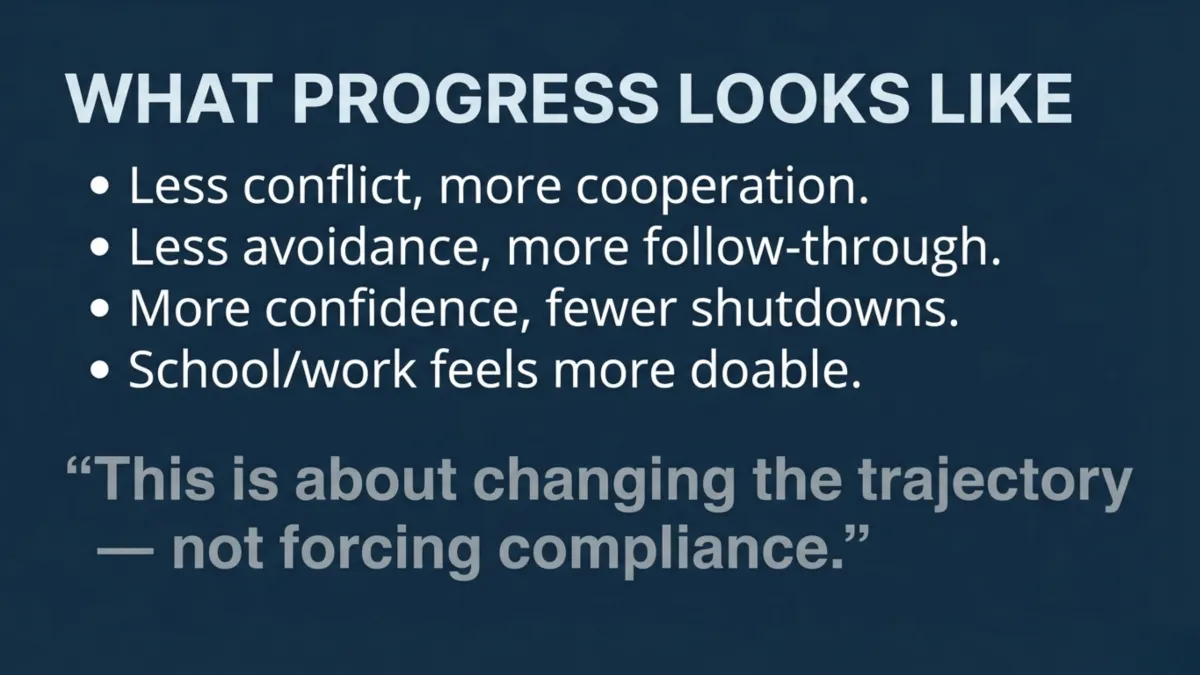
What progress looks like — less conflict more cooperation; less avoidance more follow-through; more confidence fewer shutdowns; school/work feels more doable — “changing the trajectory, not forcing compliance”

"Isaac has improved so much in focus/attention, coordination, and writing. I love that the program not only gave my son much-needed skills but also strategies to help deal with the big emotions that come with years of not being able to do what the other kids find easy.” - Liddy

"ADHD Learning Pathway’s program totally changed our child's attitude towards school. It stopped the meltdowns and helped her improve her grades. Most importantly, she enjoyed the process, not the same old reading, writing, and matching drills. It was a series of ten "fun" neural processes that strengthened her ability to learn!" - Alexis
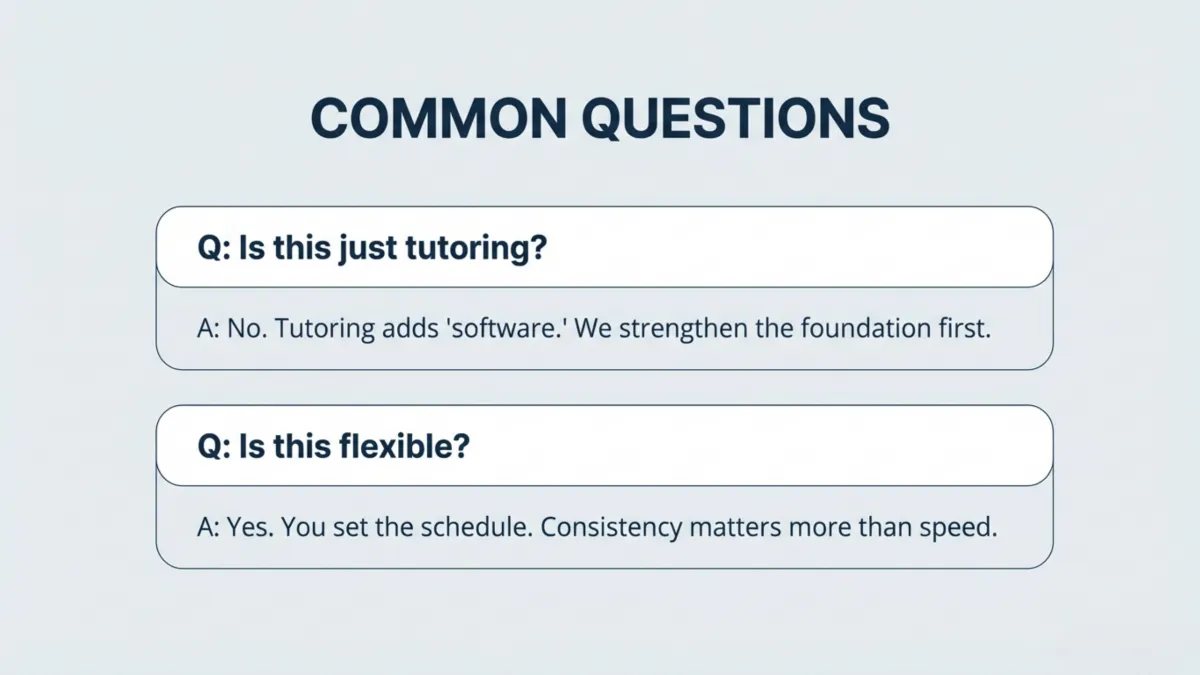
Common questions — “Is this just tutoring?” answer: no, tutoring adds software, we strengthen the foundation first — “Is this flexible?” yes, you set the schedule; consistency matters more than speed
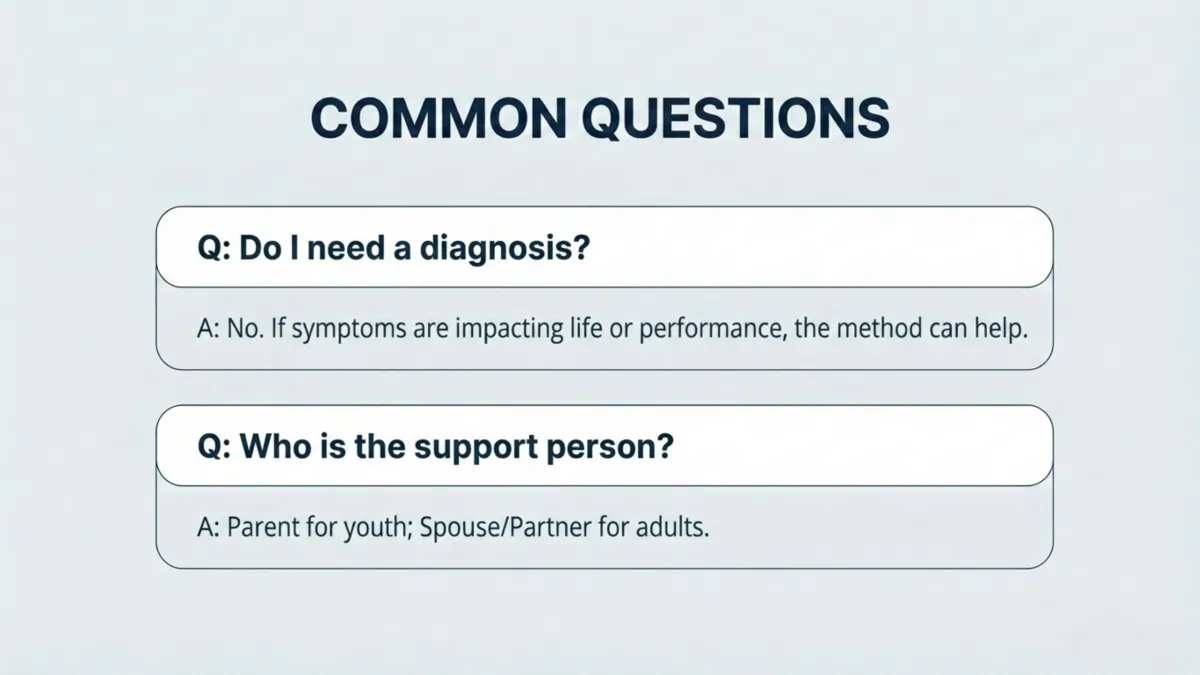
Common questions — “Do I need a diagnosis?” no, if symptoms impact life or performance the method can help — “Who is the support person?” parent for youth; spouse/partner for adults

READY TO START WITH

THE RIGHT PROGRAM?

You don't need to do everything right. You just need the

next right step-- with a structure you can follow.