
Caught in the ADHD Riptide?
There's a Way Through These Waters
It's called the ADHD Success Navigator Method™, and it's the breakthrough brain-training system that empowers you or your loved one to achieve focus, emotional balance, and lasting confidence—without accommodations, medication dependency, or endless therapy.
Drifting Without Direction
Many families facing ADHD feel like they're:
💨 Watching their loved one struggle against invisible currents daily
🌊 Searching for answers while professionals offer only temporary solutions
🌀 Seeing bright potential being swept away by distractions and emotional storms
Feeling abandoned by educational systems focused on symptoms, not solutions
Wondering if there's a greater purpose in this challenging journey
Every challenge has meaning, and every struggle can lead to unexpected strength.
🚨Why Fighting Harder Isn’t The Answer.
You’ve tried the endless routines, the constant coaching, and the same advice you hear everywhere. You’ve been told to "just try harder," to "focus more," or to keep coming back for another session.
The education system isn’t going to change.
Doctors aren’t going to offer anything but medication.
Therapists won’t give you a way out—they’ll just keep you coming back, session after session.
It’s time to stop paddling upstream.
It’s time to turn the boat and move with the current.
With the right tools and the right direction, you or your child can learn to work WITH ADHD instead of drowning in it.
That’s exactly what the ADHD Success Navigator Method™ does.
"ADHD Learning Pathways has been a game-changer for me. I used to struggle with staying organized and managing my time at work. Now, I'm excelling in my career and personal life. Thank you, ADHD Learning Pathways!"
RON
"He is now earning all A’s and B’s in school, is completing all classwork in class, is completing most homework assignments in class, and best of all, he is retaining the information and able to recall. On top of that, his social skills have greatly improved as well as his physical abilities"
SUE
The ADHD Success Navigator Method™
– Walking Sideways to Freedom
If you get caught in a rip current, the worst thing you can do is
fight against it. The only way out is to move sideways.
But what if, instead of struggling, you learned how to navigate ADHD in a way that works with the brain—not against it?
That’s what the ADHD Success Navigator Method™ is all about. It’s not about forcing focus.
It’s about rewiring how the brain processes information, stores it, and responds automatically.
We don’t try to "fix" ADHD.
We navigate it —so you or your child can thrive naturally.
We don’t force ADHD brains to fit into a broken system.
ADHD struggles come from one of three places in the brain’s processing system:
Input
Struggles with focus, distractions, or absorbing information.
Storage
Difficulty remembering, organizing thoughts, or retrieving information.
Output
Trouble following through, managing emotions, or completing tasks.
If something is holding you or your child back, it’s because one of these brain processes isn’t working efficiently.
Most ADHD solutions focus on managing the symptoms—medications, accommodations, behavior charts—but what if there was a way to retrain the brain itself?
The truth is, ADHD isn’t a discipline problem. It’s not a motivation issue. And it’s definitely not something you or your child should feel ashamed of. The ADHD brain
works differently—and it needs a different approach.
This isn’t about forcing focus or using short-term fixes. It’s about working with the ADHD brain to create lasting change—so success becomes second nature.
Meet The ADHD Success Navigator Method™
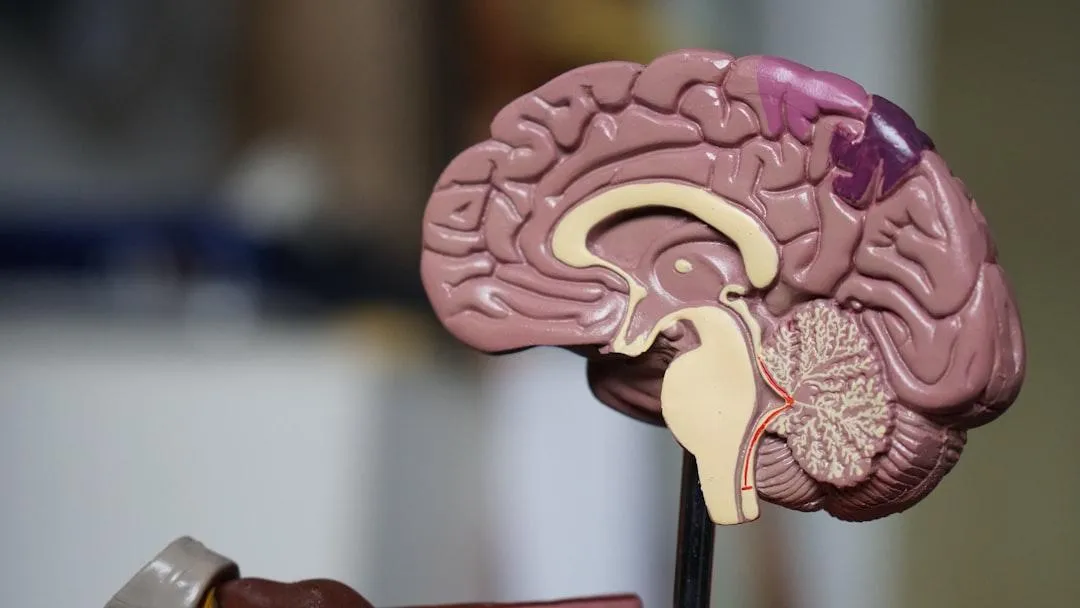
A breakthrough brain-training system that rewires focus, emotional control, and executive function using movement-based learning.
Unlike traditional ADHD treatments that rely on external support , we help the brain develop the skills to succeed naturally.
Here’s how it works:

Real-World
Brain’s Processing Ability
Instead of forcing ADHD brains to work in a way they aren’t wired for, we train the brain to
receive, store, and retrieve information efficiently
—turning distractions into focus and frustration into confidence.

Loved One
One-on-One Training
Success isn’t just about strategies—it’s about connection. Through guided activities with a parent, spouse, or mentor, participants build
trust, confidence, and belief in their abilities.

Cognitive & Physical Exercises
Mind-Body Connection
The brain and body are connected.
Movement-based training
improves
processing speed, focus, and emotional regulation
in ways that traditional methods
can’t.
Cognitive & Physical Exercises
Mind-Body Connection
The brain and body are connected.
Movement-based training
improves
processing speed, focus, and emotional regulation
in ways that traditional methods
can’t.

Training
Behavior Modification
ADHD isn’t about discipline—it’s about creating the
right habits
. We teach
self-regulation, impulse control, and practical strategies
to turn
chaos into consistency.
Real-World
Executive Function Training
Success isn’t about memorizing strategies—it’s about
applying them in everyday life
. We teach skills that make organization, time management, and follow-through
automatic.
Your Next Step:
Stop Fighting the Current & Start Navigating ADHD Successfully
No more fighting ADHD.
No more getting stuck in a system that won’t change.
It’s time to step out of the current and move forward.
Who This Is For
Parents who are tired of the school system not understanding their child and want to see real progress.
Adults who are exhausted from feeling stuck, disorganized, and constantly behind.
Families who want to build stronger relationships while overcoming ADHD challenges together.
This program isn’t about coping—it’s about transforming how the brain works.
What Happens When ADHD No Longer Holds You Back?
The Riptide of Distractions Fades Away
Your child stays on task, finishes assignments, and stays present in conversations
You feel in control of your time and productivity—no more feeling behind.
The Undertow of Emotional Overwhelm Calms
No more meltdowns, frustration, or explosive reactions.
Your child learns how to self-regulate, manage frustration, and express emotions healthily.
You Stop Paddling Against the Current
You no longer feel alone in this battle—because now you have a proven system that works.
ADHD is no longer something to fear—it becomes a strength.
"Isaac has improved so much in focus/attention, coordination, and writing. I love that the program not only gave my son much-needed skills but also strategies to help deal with the big emotions that come with years of not being able to do what the other kids find easy.”
Libby D
"ADHD Learning Pathway’s program totally changed our child's attitude towards school. It stopped the melt-downs and helped her improve her grades. Most importantly, she enjoyed the process; not the same old reading, writing and matching drills. It was a series of ten "fun" neural processes that strengthened her ability to learn!"
ALEXIS
Choose Your ADHD Success Navigator Method Path
BASE (Ages 5-6) – Building a Strong Foundation
Young children with ADHD need more than rules and reminders
—they need brain activation exercises that lay the foundation for learning, focus, and emotional regulation.
Strengthens attention span and listening skills.
Builds early executive function skills.
Improves coordination, focus, and impulse control.
YOUTH (Ages 7-18) – Rewiring the ADHD Brain for Focus & Confidence
For kids & teens struggling with focus, school challenges, and emotional regulation, this camp is designed to train their brain to work smarter, not harder.
Develops focus & task completion skills—without constant reminders.
Reduces meltdowns, frustration, and impulsivity.
Strengthens confidence in school, friendships, and daily life.
ADULTS – Take Control of ADHD & Create a Life You Love
ADHD doesn’t disappear in adulthood—but you don’t have to live in constant stress, overwhelm, and self-doubt.
Learn how to stay on task, manage time, and follow through.
Overcome disorganization, procrastination, and feeling stuck.
Improve relationships, work performance, and self-confidence.

Evidence-Based ADHD Behavior Support for Kids: What Works (and How to Choose)
Evidence-Based ADHD Behavior Support for Kids: What Works (and How to Choose)
If you’re parenting a child with ADHD, you’ve probably lived this scene:
You ask for shoes. You get an argument.
You ask for homework. You get tears—or a blank stare.
You ask for “one more minute.” You get 45.
And then, because you’re a good parent who cares, you ask the most reasonable question on earth:
“What actually works?”
The good news: we’re not guessing. A narrative review published in Cureus summarizes multiple evidence-based approaches used to reduce behavioral problems and improve daily functioning for children with ADHD.
This guide walks you through the major options—plain English, parent-focused—and then shows how programs like ADHD Learning Pathways can fit into a broader, well-rounded plan (without trying to sell you something).
ADHD is common—and it changes with age
The Cureus review reports that ADHD prevalence is often cited in the 4–7% range globally, and also notes substantial differences by age group in the data they summarized (with higher rates reported for school-age children and adolescents than preschoolers).
Translation: ADHD is not rare, and the needs of a 5-year-old with ADHD look different than the needs of a 15-year-old.
That matters, because the “best” intervention is often the one that matches:
your child’s age and development,
the setting where problems show up (home vs school vs social),
and the specific skill gaps underneath the behaviors.
The big idea: target the environment AND the skills
One of the most practical takeaways from the research is that ADHD support works best when it’s not a single tactic—it’s a coordinated plan.
Think of it as a 3-part system:
Home supports (parent strategies and routines)
School supports (accommodations + structure)
Skill-building supports (training attention, organization, self-regulation)
The Cureus review covers all three categories.
Let’s break them down.
1) Parent training (behavioral management): “Change the inputs”
Parent Training Behavioral Management (PTBM) is consistently listed as a cornerstone non-medication intervention in many guidelines and reviews.
The Cureus paper summarizes PTBM approaches including Triple P (Positive Parenting Program), PCIT (Parent-Child Interaction Therapy), and NFPP (New Forest Parenting Program), describing them as structured programs that help parents apply specific strategies to reduce problem behaviors and build positive behaviors at home.
The American Academy of Pediatrics also emphasizes evidence-based parent training—especially as first-line treatment for preschool-aged children. (AAP Publications)
What parent training tends to include
Clear expectations (the child knows what success looks like)
Consistent reinforcement (you’re rewarding what you want repeated)
Predictable consequences (not harsher; just predictable)
Coaching you to stay steady even when your child is not
This is not “just be stricter.” It’s behavior change engineering—with a child nervous system in mind.
2) School-based supports: IEP and 504 accommodations
If a child’s ADHD affects school performance, supports can be formalized.
The Cureus review specifically discusses school-based interventions and notes:
ADHD may qualify for services under the Individuals with Disabilities Education Act (IDEA) with an Individualized Education Program (IEP) when educational functioning is impacted.
Section 504 accommodations can provide practical supports such as a quiet testing space, homework reduction/clarification, breaking tests into smaller parts, modified test format, and extended time.
Why this matters
Many “behavior problems” are actually overload problems:
too many instructions at once,
too much work without chunking,
too much noise, too little structure,
too little time to demonstrate learning.
School supports don’t lower standards. They reduce friction so learning can happen.
3) Peer-based interventions: social success is not optional
The Cureus review highlights peer difficulties and describes peer-based approaches, including peer-mediated formats and “peer proximity” strategies (pairing a child with ADHD near a socially skilled peer). It also notes structured peer-mediated interventions can improve peer relationships even without adding medication.
Social stress can fuel behavioral stress. When school feels unsafe socially, behavior often deteriorates—at school or later at home.
4) Skills-based interventions: training the “doing” part of the brain
This category is where many parents feel relief, because it reframes ADHD behavior:
Not as “won’t,” but often as “can’t yet.”
The Cureus review lists several skill-based interventions:
Cognitive Behavioral Therapy (CBT)
The review describes CBT as helpful for improving effectiveness and notes findings that planning skills developed through CBT can improve symptoms.
Working memory and cognitive training
The review references working memory training options (e.g., Cogmed) and game-based modalities reporting improvements in working memory.
Biofeedback / neurofeedback
It describes biofeedback/neurofeedback as sensor-based training that can make self-regulation feel “game-like,” and frames it as a way to support focus and executive function via feedback on physiological signals and brain activity.
Organizational Skills Training
The review describes organizational training using daily planners, to-do lists, breaking tasks into parts, and references a program that was rated highly by teachers.
5) Mindfulness and meditation: helpful, with realistic expectations
The Cureus review cites a meta-analysis finding modest improvements in attention, behavioral regulation, and emotional functioning in children with ADHD using meditation-based therapies, while noting evidence quality as moderate.
Mindfulness isn’t magic. But it can be a meaningful “regulation layer” in a larger plan—especially for emotional reactivity and transitions.
6) Medication: where it fits (and what the review says)
Medication decisions should always be made with a qualified clinician. That said, parents benefit from knowing the overall landscape.
The Cureus review states that stimulants are first-line medications for ADHD with extensive evidence of efficacy and a known safety profile, describing two main stimulant classes: amphetamine-based and methylphenidate-based.
It also describes atomoxetine as a non-stimulant option and notes a timeline of 1–2 weeks for initial benefit and 4–6 weeks for maximal effect.
A helpful way to think about medication is this:
Medication can reduce “noise” in the system,
but many kids still need skills + structure to convert improved attention into improved outcomes.
How ADHD Learning Pathways fits
Families often ask: “Which category are you in?”
Based on what you’ve shared about your programs, ADHD Learning Pathways most naturally aligns with the skills-based intervention side of the evidence map—especially where families want to strengthen underlying processes that support learning, focus, and day-to-day performance.
In a “whole-child plan,” your programs can be described on the blog as:
Skills training that complements parent strategies at home and accommodations at school
A structured way to target the practical skills that drive follow-through, attention control, and learning stamina
“Some families use structured skills training programs to strengthen the foundations that make other supports work better—home routines stick, school supports get used, and coping tools become more automatic.”
No hype. No hard pitch. Just clarity.
A simple decision guide for parents
Here’s a parent-friendly “choose your next step” flow:
If mornings, homework, and transitions are the daily battleground → Parent training + routines (PTBM)
If school is melting down (grades, missing work, constant calls home) → IEP/504 conversation + classroom strategies
If your child can “know better” but can’t “do better” consistently → skills-based training (organization, planning, working memory, self-regulation)
If friendships are a major pain point → peer-based supports and structured social practice
If attention/emotional control is improving slowly and you want a low-risk add-on → mindfulness (modest effects; best as a layer)
If impairment is high and daily function is significantly limited → discuss medication options with a clinician as part of a broader plan
Important note on evidence (and why it matters)
The Cureus review also notes a real limitation: many high-quality intervention studies come from high-income countries, and evidence from low- and middle-income settings—especially for non-pharmacological approaches and long-term outcomes—is more limited.
That doesn’t mean “nothing works.” It means you should favor:
approaches with repeated support across settings (home/school),
interventions that measure real-world function,
and plans you can actually sustain.
Conclusion: the goal is progress, you can see at home and school
ADHD support isn’t one decision. It’s a set of aligned decisions.
When a plan includes:
parent strategies that reduce conflict,
school supports that reduce friction,
and skills training that builds capacity,
…behavior changes stop being a mystery and start becoming predictable.